
The word “gnocchi” puzzles more than 153,000 people each year who search for its correct pronunciation. This makes it the most challenging pasta name to pronounce. “Spaghetti” and “penne” create similar confusion with 101,460 and 33,890 annual pronunciation searches.
Italian pasta’s global popularity has skyrocketed since the first World Pasta Congress in Milan on October 25, 1995. Recent research that analyzed more than 150 pasta varieties shows English speakers struggle with even basic names like macaroni. The pronunciation challenges range from “vermicelli” (which literally means “little worms”) to complex names like “tagliatelle” and “pappardelle.” This piece will help you master seven commonly mispronounced pasta names correctly.
But beyond just pasta names, learning to speak Italian with confidence can enhance your appreciation of its rich culinary culture. Before we dive into the seven most commonly mispronounced pasta names, let me introduce you to Preply. They offer online Italian courses with expert tutors to help you improve your vocabulary, grammar, pronunciation, and conversation skills. In fact, I’ve relied on their research for this article! Now, let’s get into those tricky pasta names and how to say them correctly.
Gnocchi: The Most Misunderstood Pasta
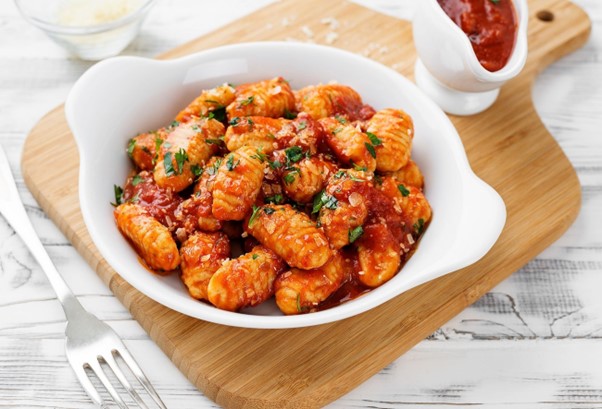
The word “gnocchi” comes from the Venetian word “gnoco,” which means protuberance or bulge. This term evolved from the Lombard word “knohhil” (knot in wood). These small, rounded dumplings have been a staple on Italian tables since Roman times.
Origins of Gnocchi’s Name
“Gnocchi” comes from “nocchio,” meaning a knot in wood, or “nocca,” which refers to knuckles. This traditional Italian dish existed before potatoes arrived in Europe. Ancient Roman recipes used semolina porridge-like dough mixed with eggs. The potato-based gnocchi we know today appeared after Spanish explorers brought potatoes from South America in the 16th century.
Common Pronunciation Mistakes
English speakers face three main challenges when pronouncing gnocchi. The “gn” sound needs a specific tongue position that creates a nasal “ny” sound like the Spanish “ñ”. Many English speakers mistakenly use an “ow” sound, but the “o” should be short. The “cch” needs careful attention too – in Italian, “ch” makes a “k” sound, and the double “c” adds emphasis.
Regional Variations in Italy
Italian regions have their own special takes on gnocchi. Piedmont and Lombardy serve potato gnocchi with butter and Parmesan. Venice calls their gnocchi “macaroni” – they make it with flour, milk, and eggs, then bake it with butter and cheese. The Veneto region’s cool climate makes it perfect for growing potatoes, making it the birthplace of potato gnocchi. The dish’s texture ranges from bouncy to crunchy depending on whether it’s boiled, baked, or fried.
| Region | Style | Key Ingredients |
| Rome | Gnocchi alla Romana | Semolina, baked until golden |
| Lombardy | Traditional | Potato-based with cheese |
| Tuscany | Gnudi | Ricotta, spinach, no potato |
| Sorrento | Alla Sorrentina | Baked with tomato sauce, mozzarella |
Tagliatelle: A Cut Above the Rest
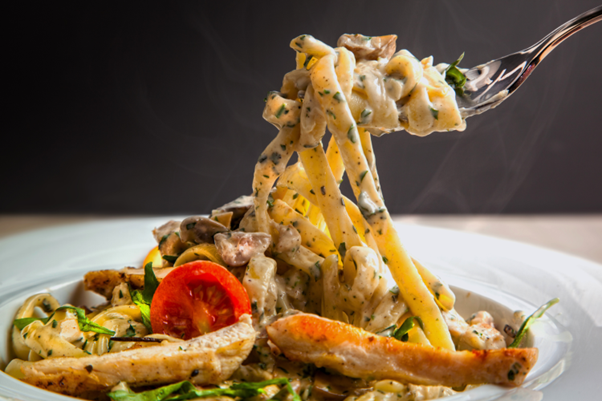
Tagliatelle stands among Italy’s most celebrated pasta varieties. Its story goes back to the Renaissance, first mentioned in a 1549 treaty by Cristoforo di Messisbugo, who served as steward of the House of Este in Ferrara.
Etymology and History
The pasta’s name comes from the Italian verb “tagliare,” which means “to cut.” This reflects the way people make it by rolling pasta dough into sheets and cutting them into ribbons. The recipe is simple yet precise – one egg for every hundred grams of flour. Bologna’s Chamber of Commerce houses a fascinating piece of history – a solid gold replica that shows the exact width of 8 millimeters when cooked, or 6.5-7 millimeters uncooked.
Pronunciation Guide
You can break down tagliatelle’s pronunciation into distinct syllables:
| Pronunciation Component | Sound Guide |
| UK Version | tæl.jəˈtel.i |
| US Version | tɑːl.jəˈtel.i |
| Italian Version | tahl-yah-TELL-eh |
The sort of thing I love about the pronunciation is how the ‘a’ needs an open sound – you should open your mouth wide. The tricky ‘gl’ sound is like “lee” in Italian. The quickest way to get it right is to say “tahl” and “yah” separately.
Northern Italian Heritage
Tagliatelle has deep roots in Northern Italy, especially in Emilia-Romagna, the Marche, and Tuscany. These regions take pride in their fresh tagliatelle, which remains essential to their local food traditions. You’ll find both fresh and dried versions in Emilia-Romagna, and local pasta shops throughout the region make it daily.
The traditional method uses soft wheat flour and egg pasta dough rolled into thin sheets before cutting into ribbons. Different regions have created their own versions using:
- Rye flour
- Hazelnut flour
- Chestnut flour
Southern Italy’s pasta tradition differs from the North – they make similar pasta shapes but use only flour and water, skipping the eggs. Modern times haven’t diminished tagliatelle’s cultural importance. People in Emilia-Romagna and Tuscany can find fresh versions in their local supermarket’s refrigerated sections.
Orecchiette: The Little Ears of Puglia
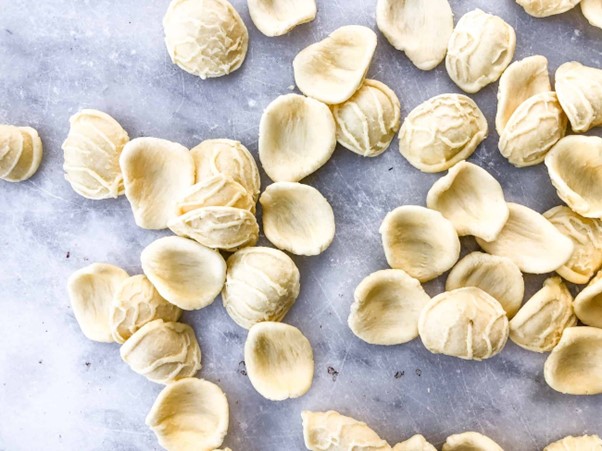
A unique pasta shape emerged between the 12th and 13th centuries in Puglia’s heartland. Its distinctive ear-like form would become one of Italy’s most treasured culinary creations.
Name Origins and Meaning
“Orecchiette” comes from the Italian word “orecchia” (ear) with the diminutive suffix “-ette”. The pasta goes by several names across regions of Puglia. Taranto locals call them “recchietedde” or “chiancaredde,” while Cisternino residents know them as “recchie d’ privte” (priest’s ears).
Correct Pronunciation Steps
The proper pronunciation of orecchiette follows distinct phonetic patterns:
| Pronunciation Version | Phonetic Guide |
| UK Standard | ˌɒr.ek.iːˈet.eɪ |
| US Standard | oʊˌrek.iːˈet.eɪ |
| Italian Standard | ohr-ehk-kee-eht-tee |
Common mispronunciations include:
- or-ehh-kee-tee
- or-eh-chee-tee
- or-eehch-eht
Cultural Significance
Hand-crafted orecchiette is the life-blood of Puglian culinary heritage. Artisans create the dough from re-milled durum wheat semolina, water, and salt. Bari’s cooks make smaller versions for Sunday meat sauce, while larger varieties pair perfectly with cabbage and turnip tops.
Puglia’s streets still buzz with skilled women who shape orecchiette outside their homes. Expert makers can prepare dozens of pounds daily through their mastery of cutting and rotating the pasta. They start by forming a thin rope of dough, cut it into half-inch pieces, and press each piece against the work surface with a thumb or knife point.
Each region of Puglia creates its own distinct version. Foggia artisans craft larger “rècchie de prèvete,” while Bari produces more delicate forms. Bari’s technique stands out uniquely – artisans use two index fingers to stretch the dough while pulling it with a knife. This creates a natural dome without turning it on the finger.
This pasta shape symbolizes Puglia’s gastronomic identity. All the same, orecchiette wasn’t always an everyday dish. People served it mainly on Sundays or during celebrations.
Pappardelle: The Wide and Wonderful
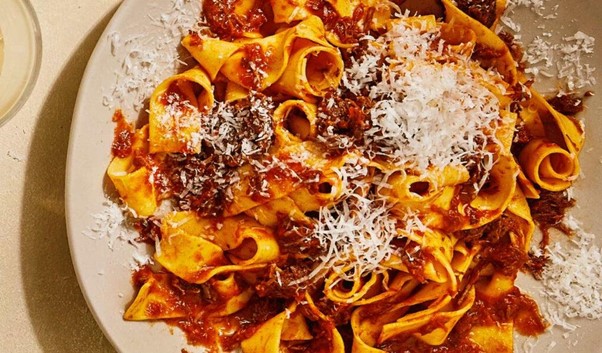
Pappardelle’s unique width of 2-3 centimeters sets it apart from other pasta shapes, making it one of Italy’s most recognizable pasta varieties. This broad, flat pasta carries centuries of Tuscan culinary tradition.
Historical Background
Pappardelle first appeared in Tuscany during the 14th century, marking a substantial milestone in Italian pasta history. Its name comes from the Latin word “pappare,” which means “to eat with pleasure” or “to gobble up”. The Tuscan dialect later adapted this term to reflect people’s enthusiasm when eating this hearty pasta.
Early versions of pappardelle looked quite different from what we see today. Local peasants made these noodles with chestnut flour and water. The renowned cook Domenico Romoli helped lift pappardelle’s status by the 16th century. He described them as “soft, delicate, and thin lasagna” that graced Florentine cardinals’ tables.
Pronunciation Tips
Italian phonetic rules guide the correct pronunciation of pappardelle:
| Component | Sound Guide | Key Note |
| First Part | pah | Open ‘A’ sound |
| Middle | ppahr | Stressed double ‘P’ |
| End | dell-eh | Emphasized double ‘L’ |
English speakers often mistake the final “-eh” for “-ee”. To become skilled at pronunciation, focus on the double letters that need longer, stressed sounds rather than changed pronunciations.
Regional Importance
Central Italian cuisine claims pappardelle as its own. The pasta’s slightly rough surface makes it perfect for rich, hearty sauces. Traditional Tuscan dishes include:
- Wild boar ragù
- Foraged mushroom sauces
- Rabbit-based preparations with freshly grated cheese
Pappardelle serves as the life-blood of regional identity in Tuscany and Umbria. Some areas make wider versions up to 8 centimeters, though most stick to the standard 2-3 centimeters. Modern recipes stay true to the traditional egg-based dough, while some Umbrian versions add dry white wine for extra flavor.
Farfalle: The Butterfly Pasta
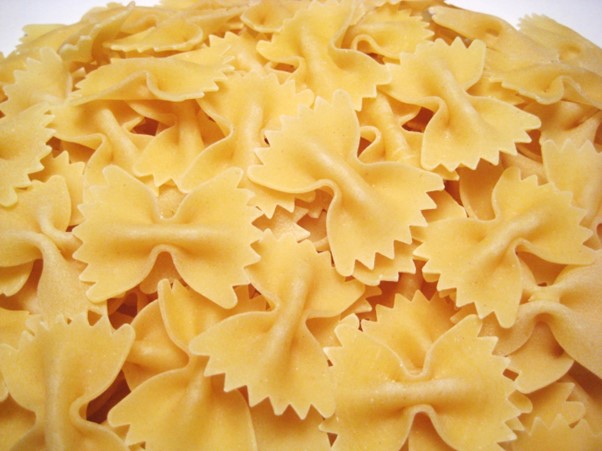
Farfalle, one of Italy’s oldest pasta shapes, traces its roots to Lombardy and Emilia-Romagna in the 16th century. This unique pasta resembles small butterflies or bow ties and showcases Italy’s rich pasta-making heritage.
Name Etymology
The word “farfalle” comes from the Italian “farfalla,” which means butterfly. People in Emilia-Romagna also call this pasta “strichetti”. The pasta’s story began with clever housewives who used leftover dough from making cappelletti. The shape became so popular that cooks started making extra dough just to create farfalle.
Pronunciation Guide
You’ll hear farfalle pronounced differently depending on where you are:
| Region | Phonetic Guide | Key Sounds |
| UK | fɑːˈfæl.eɪ | Emphasis on second syllable |
| US | fɑːrˈfɑː.leɪ | Rolled ‘r’ sound |
| Italian | far-FAH-leh | Stress on middle syllable |
The second syllable gets the emphasis, and the ‘f’ sounds soft like in “fish”. The final ‘e’ makes an “eh” sound that rhymes with “let”.
Cultural Context
Northern Italy cherishes farfalle in its traditional cooking. The pasta comes in different sizes:
- Farfalline (smaller version)
- Farfallone (larger version)
- Farfalle rigate (ridged variation)
Skilled artisans make farfalle from small rectangular pieces of pasta dough. They carefully trim the edges to create ruffled patterns. The center gets pinched during creation, which makes it thicker and needs more cooking time.
Common Mistakes
English speakers often stumble with the farfalle pronunciation:
- Saying it as “far-fall-ee”
- Putting stress on the first syllable
- Using a hard ‘v’ instead of a soft ‘f’
This versatile pasta appears in countless Italian dishes. Lombardy’s chefs create farfalle cremasca with amaretti biscuits, butter, and sage. Modern versions include tricolore farfalle that uses spinach for green, beetroot for red, and plain pasta for white – matching Italy’s flag colors.
Vermicelli: Not Just Little Worms
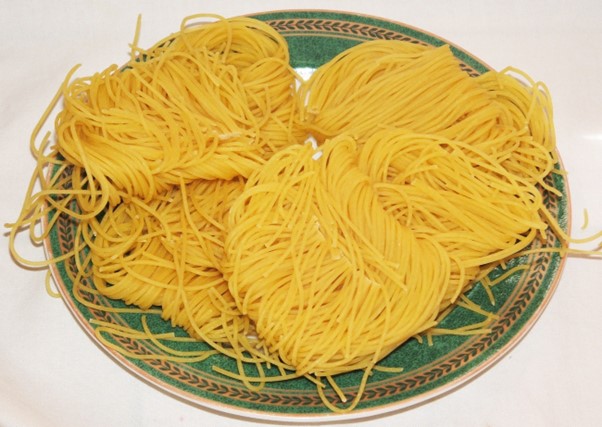
Vermicelli, one of the earliest documented pasta shapes, traces its roots to the 1660s in culinary history. This long, slender pasta has a fascinating story that crosses continents and cultures.
Name Origins
The word “vermicelli” comes from the Italian word “verme,” which means worm. The suffix creates a literal translation of “little worms”. The pasta’s distinctive appearance, rather than its ingredients or preparation method, inspired this name. Records from the mid-1600s contain the first documented mentions of vermicelli, establishing it as a cornerstone of Italian pasta tradition.
Pronunciation Basics
Vermicelli’s correct pronunciation varies between English-speaking regions and Italy:
| Region | Phonetic Guide | Key Sounds |
| UK | vɜː.mɪˈtʃel.i | vur-muh-CHEL-ee |
| US | vɝː.mɪˈtʃel.i | vuhr-muh-CHEL-ee |
| Italian | vermiˈtʃɛlli | ver-mee-CHEL-ee |
Many speakers find it challenging to emphasize “che” and the final “i” sound correctly. English speakers often struggle with the initial “ver” sound, which needs a softer articulation than typical English words.
Global Variations
Vermicelli has evolved beyond its Italian roots and adapted to culinary traditions worldwide. Egyptian and Levantine cuisines feature it as shaʿīriyya (شعيرية), a common ingredient in rice dishes. Somalia’s sweet dish cadriyad uses this pasta, drawing its heritage from Yemen’s ʿaṭriyah (عطرية).
South Asia’s adaptation of vermicelli has led to several regional names:
- Telugu regions know it as semya (సేమ్యా)
- Tamil speakers differentiate between sémiya (wheat-based) and sevai (rice-based)
- Hindi and Urdu speakers call it seviyan
Rice vermicelli has become essential to many Southeast Asian traditional dishes. Latin America developed a similar noodle called fideo, which cooks break into shorter pieces for soups.
Italian vermicelli appears thicker than spaghetti, though English-speaking regions reverse this relationship, considering vermicelli the thinner variant. Campania’s pasta makers, once called ‘vermicellari,’ highlight this pasta’s historical importance.
Regional preparation methods show remarkable diversity. Indian cooks often dry roast the noodles before simmering them with aromatics. Mediterranean dishes typically serve the pasta in its original form with various sauces and accompaniments.
Penne: Simple Yet Tricky

Penne ranks among Italy’s most beloved pasta shapes. Its simple appearance hides some tricky pronunciation challenges. The cylindrical pasta with diagonal-cut ends showcases a beautiful mix of culinary art and precise linguistics.
Etymology Explained
The word “penne” comes from the Italian “penna,” which means quill or feather. Giovanni Battista Capurro deserves credit for this clever naming choice that reflects the pasta’s similarity to a fountain pen’s tip. The diagonal cuts at each end mirror a quill pen’s angled writing tip, which creates a perfect connection between its shape and name.
The word’s development has interesting Latin roots:
- From Latin “pinna” (feather)
- Through “penna” (wing)
- Finally becoming the modern Italian “penne”
Pronunciation Rules
Different English-speaking regions have their own ways of pronouncing penne:
| Region | Phonetic Guide | Key Sounds |
| UK Standard | ˈpen.eɪ | /p/ as in pen, /eɪ/ as in day |
| US Standard | ˈpen.i | /p/ as in pen, /i/ as in happy |
| Italian Standard | pen-neh | Stressed double ‘n’, open ‘e’ |
Italian pronunciation requires attention to two vital elements. The double ‘n’ sound needs emphasis and length. The final ‘e’ makes an open sound, unlike the English version that sometimes ends with an “-ei” sound.
Common Errors to Avoid
The most serious mistake involves the double ‘n’ sound. Using a single ‘n’ changes “penne” to “pene,” which means something completely different in Italian. This small detail shows why proper pronunciation matters in avoiding awkward moments.
People often make these mistakes:
- Missing the double ‘n’ emphasis
- Using an “ay” sound at the end
- Saying it like “penny”
Pronunciation varies beyond Italy’s borders as different languages and cultures adapt the word. The secret to saying penne correctly lies in understanding its sound components and honoring the linguistic traditions that shaped this pasta’s identity.
Comparison Table
| Pasta Name | Etymology/Name Origin | Correct Pronunciation (Italian) | Region of Origin | Key Physical Characteristics | Common Pronunciation Mistakes |
| Gnocchi | Derived from Venetian “gnoco” meaning protuberance and Lombard “knohhil” meaning knot in wood | as with “nyoh-kee” | Veneto | Rounded, small dumplings | People often use “ow” sound and get the “gn” sound wrong |
| Tagliatelle | Comes from “tagliare” meaning to cut | tahl-yah-TELL-eh | Emilia-Romagna | Ribbon-shaped pasta reaching 8mm width after cooking | Not mentioned |
| Orecchiette | The name combines “orecchia” meaning ear with “-ette” suffix | ohr-ehk-kee-eht-tee | Puglia | These pasta pieces feature a dome-like shape resembling ears | Many say “or-ehh-kee-tee” or “or-eh-chee-tee” |
| Pappardelle | Latin word “pappare” meaning to eat with pleasure gives this pasta its name | pah-ppahr-dell-eh | Tuscany | Flat ribbons measuring 2-3 cm in width | Many pronounce final “-eh” as “-ee” |
| Farfalle | Named after “farfalla” meaning butterfly | far-FAH-leh | Lombardy/Emilia-Romagna | Shaped like butterflies or bow-ties | Common error is saying “far-fall-ee” |
| Vermicelli | Named after “verme” meaning worm, translates to “little worms” | ver-mee-CHEL-ee | Campania | Thin, long noodles | People often place wrong emphasis on “che” sound |
| Penne | Takes its name from “penna” meaning quill or feather | pen-neh | Not mentioned | Features diagonal-cut ends with cylindrical shape | People often use single ‘n’ sound or say “penny” |
Conclusion
Food lovers worldwide face both challenges and rewards when they learn to pronounce Italian pasta names correctly. Seven pasta varieties tell an interesting story – from the often mispronounced gnocchi to the seemingly simple penne. These names reflect centuries of cultural heritage, regional identity, and practical meaning tied to their shapes and preparation methods.
The right pronunciation means more than just getting the words right. Small differences like saying “pen-neh” instead of “penny” or emphasizing double consonants in “far-FAH-leh” show respect for Italy’s culinary heritage. Different regions in Italy’s diverse territory have developed their own takes on these pasta types. This has led to unique ways of preparing and serving them.
Pasta’s name origins connect beautifully to everyday items. Penne takes after quill pens, farfalle mimics butterflies, and orecchiette resembles little ears. These thoughtful names help pasta lovers understand why each shape was designed the way it was.
Getting these pronunciations right takes practice and careful attention. Phonetic guides give you the quickest way to talk about Italian food with confidence and authenticity. Food enthusiasts can share their love for Italy’s pasta traditions better when they pronounce the names correctly.
Article written by Jonathan Bara.

Leave a Reply