
Every January, a lot of us start the year by taking things away. No bread, no snacks after 8 p.m., and by mid-February most of those rules have quietly disappeared along with the willpower that propped them up.
A plan built on “no” tends to leave you hungry at 3 p.m., which is exactly when the vending machine starts to look reasonable.
So try flipping the question this year. Instead of asking what to cut, ask what each meal is built around, and make the answer protein.
If you want to see what a well-built plate looks like in numbers, the high protein meals delivered by Bondi Meal Prep are a handy reference, even though the company only ships within Australia. Its high-protein range lists a grass-fed lamb and broccoli rice dish at 347 calories, 53.1 grams of protein and just 4.8 grams of carbs, which is the kind of ratio worth copying at your own stove.
Why protein is a better starting point than cutting
The newest federal advice backs this approach. The Dietary Guidelines for Americans, 2025-2030, published on the official Real Food guidelines site, say every meal should prioritize high-quality, nutrient-dense protein from both animal and plant sources.
They also give a daily target of 1.2 to 1.6 grams of protein per kilogram of body weight. For a 150-pound adult (about 68 kilograms), that works out to roughly 82 to 109 grams a day.
That’s a number you can actually aim for, and aiming for something feels very different from white-knuckling your way past the pantry.
There’s a quieter benefit too. When your attention goes to getting enough of one thing, you spend far less energy policing everything you’ve decided you can’t have.
What “macro-balanced” actually means on a plate
Macros are the three nutrients that carry calories: protein, carbohydrates and fat. A balanced plate doesn’t split them into equal thirds; it makes sure the protein portion is big enough to count, then lets carbs and fat fill in around it.
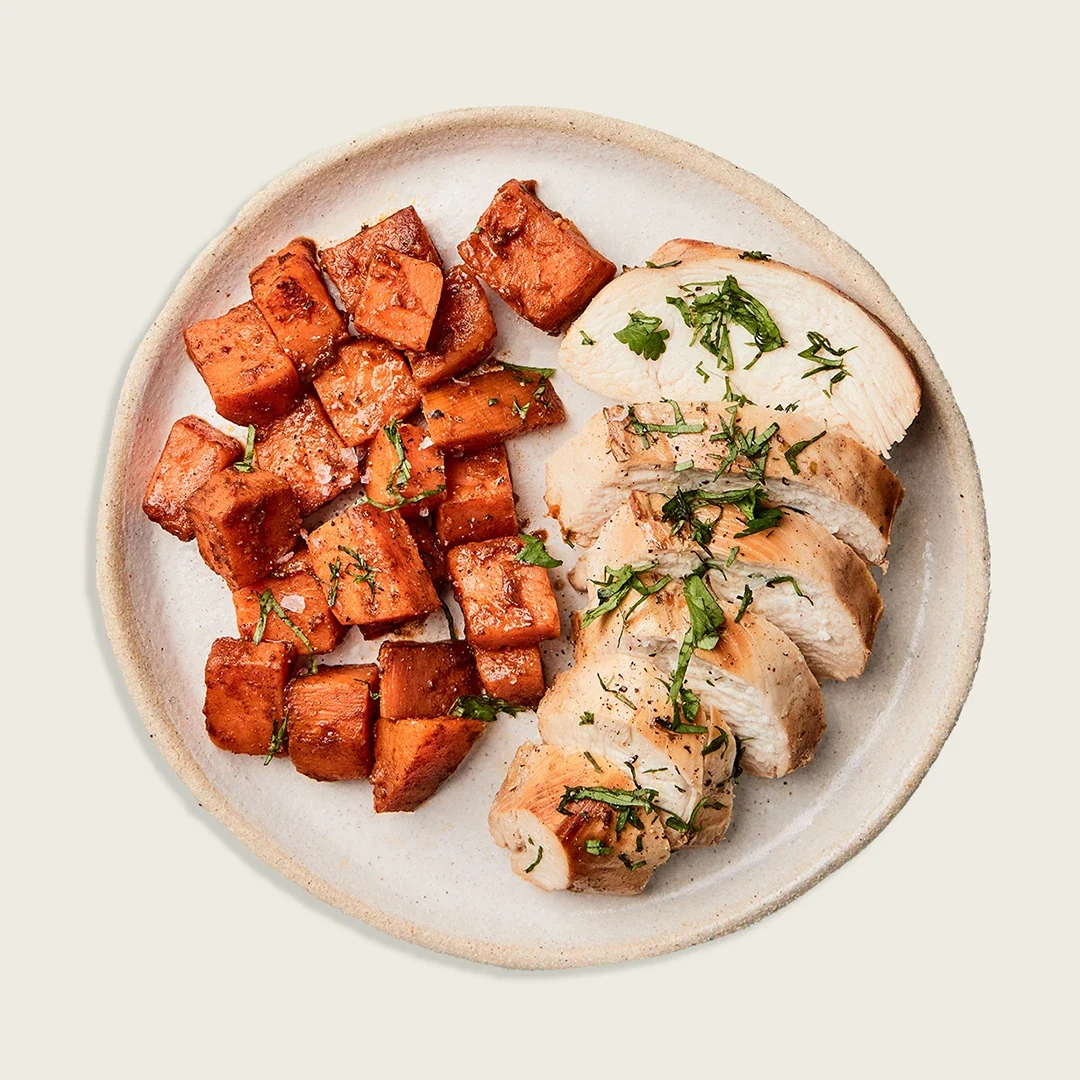
Two more dishes from that same Australian range show how this plays out. A chicken breast and sweet potato cubes meal comes in at 401 calories with 46.8 grams of protein, while an eye fillet steak with roasted potatoes lands at 397 calories and 47.7 grams of protein in a 320-gram portion (a little over 11 ounces).
Notice what those meals have in common. Neither skips carbs, and neither is tiny; they simply lead with a generous piece of protein and keep the extras in proportion.
Building one at home
Start with the protein and decide on it first, before you think about sides. A chicken breast, a lean steak, a couple of eggs plus Greek yogurt, a can of tuna or a serving of lentils all count.
Then add a carb you’ll genuinely enjoy, whether that’s roasted potatoes, rice or a tortilla. Fill the rest of the plate with vegetables and finish with a little fat for flavor, like olive oil, cheese or avocado.
That order matters more than any single ingredient. If the protein is decided first, the rest of the plate tends to sort itself out.
Let breakfast do some of the heavy lifting
Breakfast is where a lot of protein plans fall apart, mostly because the fastest options on a weekday morning are toast, cereal or nothing at all.
Batch cooking fixes that. A tray of make-ahead freezer breakfast burritos made on a Sunday gives you eggs, cheese and bacon that reheat in the microwave in a minute or two.
On mornings when even unwrapping foil feels like a lot, a blender drink works. This chocolate peanut butter banana protein shake clocks in at about 30.5 grams of protein and takes less than five minutes.
Either one puts a real dent in that daily target before you’ve left the house.
Keep the reset small enough to stick
Don’t overhaul every meal on January 1. Pick one meal a day, get the protein right there for a couple of weeks, and only then move on to the next.
Keep a few fallback proteins on hand for nights that go sideways. A rotisserie chicken, a tub of cottage cheese, eggs and a couple of cans of beans will rescue most dinners in under 15 minutes.
Use the same lens in the grocery store. When you pick up a frozen or ready-made meal, check the protein against the calories; the examples above show that 45 to 55 grams of protein for roughly 350 to 400 calories is a strong result.
And skip the banned-foods list entirely. The guidelines do say added sugars aren’t recommended, but a reset that starts with what you add will crowd out more of them than a list ever did.
Where this leaves you in February
By the time the gyms empty out again, the goal isn’t to have survived a month of saying no. It’s to have a handful of meals you like that happen to be built around protein, and a habit of deciding on that first.
That habit costs nothing to keep. Odds are it outlasts the resolutions, too.
I have worked in collaboration with one of our partners to provide you with this post.

Leave a Reply